Pagine

Visualizzazione post con etichetta death penalty. Mostra tutti i post

domenica 19 febbraio 2023

Pennsylvania - Il Governatore Josh Shapiro vuole abolire la pena di morte e dichiara che comunque non firmerà nessuna condanna a morte

nodeathpenalty.santegidio.org 

Può il futuro della Pennsylvania essere senza la pena di morte?
Il 17 febbraio 2023 il Governatore Josh Shapiro ha invitato l’Assemblea generale dello Stato ad abolire la pena di morte, dichiarando, che, comunque, non firmerà alcun mandato di esecuzione.
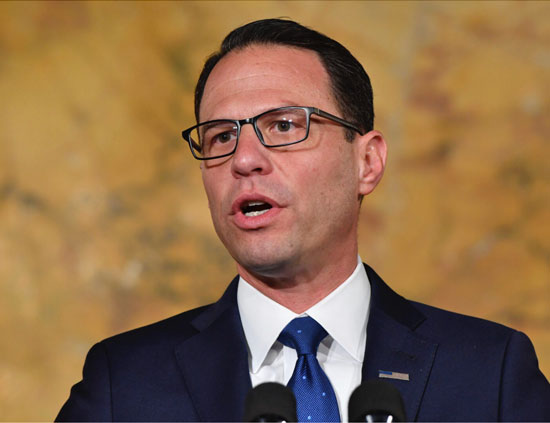
 
Governatore della Pennsylvania Josh Shapiro

Parlando alla Mosaic Community Church di West Philadelphia ha detto: “Ogni volta che ne arriverà uno sulla mia scrivania, firmerò una moratoria”e ha aggiunto che: “Il Commonwealth non dovrebbe occuparsi di mettere a morte le persone. Punto. Lo credo nel mio cuore. Questa è una dichiarazione fondamentale di moralità”. E infine l’ex procuratore generale ha concluso dicendo: «Lavorate con me per cancellarla una volta per tutte».

Si è dunque accesa una nuova speranza nel lungo cammino per l’abolizione della pena di morte nel mondo.

La storia della pena capitale in Pennsylvania è complessa. Nel 1972 la Corte Suprema statale dichiarò che la pratica, in uso sin dal 1600 con aggiustamenti sulle modalità di esecuzione, era incostituzionale. Fu ripristinata nel 1974 ma sospesa di nuovo tre anni dopo. È tornata in vigore nel 1978 nella formula tutt’ora in uso ma di fatto è inapplicata da 25 anni. Shapiro vuole andare oltre la moratoria delle esecuzioni firmata dal predecessore Tom Wolf nel 2015 e licenziare definitivamente il boia. Il Governatore ha raccontato di aver cambiato idea sulla pena capitale dopo aver sentito parlare di «grazia» tra i parenti delle vittime della sparatoria alla sinagoga di Pittsburgh del 2018. I sondaggi segnalano, tra l’altro, che il favore degli statunitensi verso la pena di morte (legale in 27 Stati su 50) è in calo.

Nel braccio della morte in Pennsylvania, oggi, ci sono 101 prigionieri. Certamente questa posizione del governatore non convince i conservatori che la ritengono troppo frettolosa e può significare diventare sordi alle preoccupazioni dei cittadini sulla sicurezza, oltre che «irrispettoso nei confronti delle vittime dei crimini più gravi». Ma in fondo proprio i parenti delle vittime hanno convinto Shapiro a eliminare la morte per mano dello Stato!

giovedì 9 agosto 2018

L'opposizione della Chiesa Cattolica alla pena di morte è iniziata con i precedenti papi - Mario Marazziti sul Los Angeles Times

Los Angeles Times
The Catholic Church's opposition to the death penalty began with previous popes
Mario Marazziti

When Pope Francis declared the death penalty “inadmissible” last week, he codified a profound recognition that capital punishment is a vestige of a barbarous past.


Predictably, Catholic proponents of the death penalty are arguing that his move is just another reckless act by a pope who is careless with doctrine and heedless of the need for continuity in church teaching.

But in fact, by ruling out capital punishment, Francis simply brought to fruition a change that had been percolating in the church for decades. His position is particularly in line with that of the two popes who preceded him.

A strong opposition to violence marked the first three centuries of Christian life. Athenagoras of Athens, Hippolytus of Rome and Tertullian of Carthage all held that violence went against the teachings of Jesus. Many early Christians refused to serve in the Roman army for the same reason, and some were executed for their refusal.

In the 4th century, however, the Roman Catholic tradition started supporting the death penalty. St. Augustine, who lived in the 5th century, viewed it as a part of war, consistent with the military obligations of a state in wartime. St. Thomas Aquinas, in the 12th century, saw it as a legitimate means of safeguarding society from dangerous criminals.

This position began to shift in the 1960s. Pope Paul VI removed capital punishment from the fundamental law of the Vatican in 1969. A few years later, he asked the Spanish dictator Gen. Francisco Franco to commute the death sentences of five convicted Basque terrorists.

It was Pope John Paul II, elected in 1978, who really began urging an end to the practice, calling it “cruel and unnecessary.” He sponsored efforts to reduce its use around the world and instructed papal representatives to oppose executions in particular countries.

When the Catholic Church first published the current catechism, in 1992, during John Paul’s pontificate, it affirmed a preference for “bloodless” penalties but allowed for the death penalty “in cases of extreme gravity.”

The church then revised the catechism five years later, amending its position on capital punishment into a near-refusal and stating that cases in which criminals should be deprived of redemption “are very rare, if not practically nonexistent.”

Pope Benedict XVI made the church’s opposition even firmer, vowing to abolish the death penalty and urging justice ministers to support efforts to eliminate it around the world.

When Pope Francis was elected in 2013, he did not bring a more extreme position to the Vatican so much as a more outspoken one. He did, however, bring a greater emphasis on the idea of mercy, especially when it came to the church’s involvement in worldly affairs.

To Francis, as he has put it, “mercy is the justice of God.” Accordingly, he views the church as a bearer of mercy rather than of justice or judgment exclusively. He even called a rare Extraordinary Jubilee Year in 2015 to focus on the issue of mercy, inviting Catholics and the world at large to both seek mercy from others and show mercy to others.

His changes to the catechism are an extension of this emphasis on mercy. The new text begins by spelling out the church’s past rationale for capital punishment: “Recourse to the death penalty on the part of legitimate authority, following a fair trial, was long considered an appropriate response to the gravity of certain crimes and an acceptable, albeit extreme, means of safeguarding the common good.”

It then states that this old reasoning is flawed, because “the dignity of the person is not lost even after the commission of very serious crimes.” It adds: “More effective systems of detention have been developed, which ensure the due protection of citizens but, at the same time, do not definitively deprive the guilty of the possibility of redemption.”

The teaching concludes: “[T]he death penalty is inadmissible because it is an attack on the inviolability and dignity of the person and [the church] works with determination for its abolition worldwide.”

Francis did not make a radical break with the teachings of his predecessors. Rather, he did away with the idea that there is that “very rare” instance in which the execution of a criminal is sanctioned. Whatever their misdeeds, a criminal remains a person — and therefore capable of remorse, a conversion of heart and redemption.

The church’s position is now consistent with the global movement to abolish the death penalty. More than 140 countries have eliminated it or stopped executions by legal or de facto moratoriums. The countries that do continue to allow the practice — including Saudi Arabia, Iran, North Korea and, yes, the United States — are exceptions.

Capital punishment is not justice. It is a vendetta, one that makes killers of those who inflict it. By eliminating the death penalty, Pope Francis has set a standard for Catholics and the rest of the world, offering a model for justice that is tempered by mercy, always and in every instance.

Mario Marazziti is the author of “13 Ways of Looking at the Death Penalty” and coordinator of the global anti-death penalty campaign of the Community of Sant’Egidio, a Catholic organization in Rome.

martedì 6 dicembre 2016

Pakistan - Dopo una settimana assolto un altro detenuto del braccio della morte dopo 10 anni di reclusione

Blog Diritti Umani - Human Rights
Islamabad: La Corte Suprema ha assolto il lunedi ancora un altro detenuto del braccio della morte, dopo 10 anni di reclusione sulla base del fatto che i suoi complici sono stati liberati dai giudici di merito sulla base degli stessi elementi di prova che è lo accusavano.


La Corte Suprema ha ordinato assoluzione immediata di Asif Saeed Khosa che ha trascorso quasi 10 anni in Adiyala carcere di Rawalpindi.

Il 25 nov, il giudice supremo aveva assolto braccio della morte detenuto Mazhar Farooq dopo 24 anni di detenzione concedendo il beneficio del dubbio.

La Corte suprema ha assolto Aamir sulla base del fatto che i testimoni erano parenti degli accusati e aveva messo in atto una faida familiare contro di lui. 

ES
Fonte: Dawn

domenica 31 gennaio 2016

Petition against the Death Penalty in Belarus - Sign

Capital punishment in Belarus, analytics, Petition against the Death Penalty in Belarus
Belarus is the last country in Europe and former Soviet Union that is still carrying out the death penalty. Amnesty International, Human Rights Centre “Viasna”, Belarusian Helsinki Committee and other human rights defenders in Belarus oppose the death penalty in all cases without exception. The death penalty is a violation of the right to life, guaranteed by the Constitution of Belarus and the Universal Declaration of Human Rights. Nothing can justify the purposeful and ruthless taking of a human life by State.

The death penalty is a destructive and divisive public policy that has been shown to have no special deterrent effect on crime. It distracts from effective measures being taken against criminality through promoting simplistic responses to complex human problems. It denies the possibility of rehabilitation and reconciliation. It prolongs the suffering of the murder victim’s family, and extends that suffering to the relatives of the condemned prisoner. Amnesty International, Human Rights Centre “Viasna”, Belarusian Helsinki Committee does not seek to belittle the suffering of the families of murder victims, and recognizes and endorses a government’s duty to protect the rights of all people under its jurisdiction. However, executions are a symptom of a culture of violence rather than a solution to it. By executing a person the state commits a premeditated killing and shows a similar readiness to use physical violence as the criminal.

In Belarus the use of the death penalty is compounded by a flawed criminal justice system that administers capital punishment in a manner that violates international laws and standards pertaining to the death penalty. There is credible evidence that torture and ill-treatment are used to extract “confessions”; condemned prisoners may not have access to effective appeal mechanisms; and the inherently cruel, inhuman and degrading nature of the death penalty is compounded for death row prisoners and their relatives by the secrecy surrounding the death penalty. Neither prisoners nor their families are told the execution date in advance and prisoners must live with the fear that every time their cell door opens they may be taken for execution.

We call on the President and Parliament of Belarus to immediately declare a moratorium on death sentences and executions as a first step towards full abolition of the death penalty.

sabato 23 gennaio 2016

US: Justice of the Supreme Court Breyer renews call to review constitutionality of death penalty

ABA Journal
Justice Stephen G. Breyer has used an Alabama capital case to renew his call to examine the constitutionality of the death penalty.
The U.S. Supreme Court refused to grant a stay of execution for the inmate, Chistopher Eugene Brooks, drawing a dissent from Breyer, report BuzzFeed News, the Montgomery Advertiser and Al.com.

Brooks was executed Thursday evening.

Breyer said Alabama allows jurors to issue an "advisory verdict" in death penalty cases using a system that is much like the death penalty scheme struck down on Jan. 12 in Hurst v. Florida.

"The unfairness inherent in treating this case differently from others which used similarly unconstitutional procedures only underscores the need to reconsider the validity of capital punishment under the Eighth Amendment," Breyer wrote.

In a concurrence to the cert denial, Justices Sonia Sotomayor and Ruth Bader Ginsburg also pointed to possible problems with Alabama's capital sentencing scheme, but said they believed procedural obstacles would have prevented the court from granting relief.

Breyer dissented a day before the U.S. Supreme Court was scheduled to consider a cert petition raising the Eighth Amendment issue in the case of Shonda Walter, BuzzFeed News reports.

"The death penalty has outlived any conceivable use," Walter's cert petition asserts. "It is imperfect in application, haphazard in result, and of negligible utility."

If the court is considering taking up the case, it probably won't act before its next conference on Feb. 19, BuzzFeed reports.

At that time, a Louisiana case also raising the constitutional issue will likely be before the court.

sabato 9 gennaio 2016

US Connecticut - After the abolition High Court Revisits Death Penalty for 11 Inmates

ABC News
Months after ruling to abolish capital punishment completely in Connecticut, the state's Supreme Court gave state attorneys another chance Thursday to argue that convicts who were on death row at the time of a 2012 state repeal law should still face execution.

The 11 inmates on death row have remained in legal limbo since the August ruling as prosecutors waited to argue the appeal.
Assistant State's Attorney Harry Weller argued the 4-3 ruling was flawed and ignored the intentions of lawmakers who called for the state law repealing capital punishment to apply only to future crimes, and not current death row inmates, the Connecticut Post reported.
Arguments were held in a case involving one of the 11 death row inmates, Russell Peeler Jr. Peeler was condemned to die for ordering the 1999 killings of Karen Clarke and her 8-year-old son, who had been expected to testify against Peeler in a shooting case.

Defense attorneys argued that that any question about legality of the death penalty already was decided by the August ruling, which declared the punishment itself unconstitutional.

The 2012 statute replaced what had been known as a "capital felony" with a new crime, "murder with special circumstances." Under the new law, anyone convicted of what would have previously been a death-penalty eligible crime is now sentenced to life in prison under conditions mimicking death row.

It also says that any inmate whose death sentence is commuted "must be placed in administrative segregation" until they are reclassified by the department. After that, they can remain in segregation, be placed in protective custody, or be placed in a housing unit for the maximum-security population under specified confinement conditions.

mercoledì 6 gennaio 2016

Bishops of Florida has appealed to Governor Scott to stop executions beginning with Oscar Bolin

Florida Conference of Catholic Bishops
Urge Governor Scott to Commute Death Sentence; Stop Signing Warrants

Oscar Ray Bolin
Oscar Ray Bolin, Jr. is scheduled to be executed by the State of Florida on January 7 at 6:00 p.m. for the 1986 murder of Teri Lynn Matthews. If carried out, Bolin would be the 23rd Death Row inmate executed under Governor Scott's leadership. Bolin is serving a separate death sentence for the murder of Stephanie Collins and received a life sentence for the murder of Natalie Blanche Holley.

On behalf of the bishops of Florida, Michael Sheedy, FCCB executive director, has appealed to Governor Scott to stop executions in Florida beginning with Oscar Bolin. "We urge you to recognize that the life of each person has dignity and should be respected, even those who have done great harm," said Sheedy in his January 4 letter to the governor.

We sympathize with the profound pain of the victims of brutal crimes. Another death, however, does not provide true healing for those who mourn.

By ending the use of the death penalty, we would take an important step to abandon the culture of death and embrace the culture of life.
ACTION: Please send a message to Governor Scott urging him to commute Oscar Bolin's death sentence to life imprisonment without the possibility of parole and to stop signing death warrants.
Also, join Catholic faithful and members of the community to pray for victims and aggressor, and their families, for our society which continues to impose violence in return for violence, and for an end to the use of the death penalty. Click here to find locations and times of prayer vigils in your area.

martedì 29 dicembre 2015

Filipino Joselito Lidasan Zapanta murder convict executed in Saudi Arabia

AP
Manila - A Filipino murder convict was publicly beheaded in Saudi Arabia on Tuesday after failing to meet the demand of the Sudanese victim's family for payment of $1 million to save him from the death penalty, officials said.

Joselito Lidasan Zapanta's execution was carried out after his family and the Philippine government managed to raise only 23 million pesos ($488,000), said Philippine Department of Foreign Affairs spokesman Charles Jose.

The victim's family refused to sign an affidavit of forgiveness that would have spared Zapanta the death penalty unless it was paid 48 million pesos ($1 million), setting a two-week deadline earlier this month for payment, Jose said.

Zapanta, a 35-year-old tile-setter, was convicted of murder and robbery by a Riyadh court in 2010.

The Department of Foreign Affairs said in a statement that the government ``has undertaken and exhausted all diplomatic and legal efforts, and extended consular and legal assistance to preserve the life of Mr. Zapanta.''

The plight of Filipino workers overseas is a sensitive issue in the Philippines. About a tenth of the country's 100 million people work abroad, including around 2.2 million in Saudi Arabia.

Jose said that 79 Filipinos are on death row in various countries, including 41 in Malaysia and 27 in Saudi Arabia.

mercoledì 23 dicembre 2015

Iran's Supreme Court overruled the death sentence against Mohammad-Ali Taheri

Iranian.com
The Iranian supreme court at Branch 33 had reportedly refused to ratify the death penalty against Mohammad-Ali Taheri, the Iranian physician. It is said that the case was submitted to the Branch 26 of the Islamic Revolutionary Court for possible reconsideration, the founder of a spiritual group's lawyer Saeed Khalili wrote on his Facebook account.

Mohammad-Ali Taheri
Mohammad-Ali Taheri, the researcher and an author in the field of Interuniversalist alternative medicine, had been convicted to capital punishment at Branch 28 of the Revolutionary Court and the court decision received by his lawyer on July 2015.

Dr. Taheri, the founder of a spiritual group so-called "Erfan-E-Halgheh" (deviated Halqeh Cult) who has been in Evin prison since May 2011, was sentenced to death on the charge of "Ifsad fi al-Arz" (spreading corruption on Earth) under Islamic Penal Code, rights groups said.

He has been in the solitary confinement since his arrest, and in November 2014, he started a dry hunger strike (whereby a prisoner refuses both food and water) for 25 days to protest against his unfair isolation inside Ward 2-A Sepah at Evin prison in Iran's capital, Tehran.

Mr. Taheri asked Ahmed Shaheed, the UN Special Rapporteur on Human Rights in Iran, to review his case by sending an open letter in April 2014.

Hereof, Amnesty International has concerned about Mr.Taheri's critical situation in a statement on 30 August 2014. Moreover, Amnesty International started acampaign to release Mr. Taheri sending a letter immediately to Iran's authorities.

Mohammad Ali Taheri was detained on 4 May 2011 by officials linked to Iran's Revolutionary Guards and held incommunicado for nine months in Ward 2-A of the Evin Prison. Branch 26 of the Islamic Revolutionary Court in Tehran convicted him, on 30 October 2011, of "insulting Islamic sanctities" and allegedly sentenced him to five years in prison after four court sessions in which he defended himself


Kaveh Taheri

lunedì 21 dicembre 2015

Two face politically-motivated execution in Bahrain based on torture ‘confessions’

Reprieve
Two Bahrainis who were tortured into ‘confessing’ to an attack on police officers in the wake of anti-Government protests last year could be executed at any moment, unless the country’s King pardons them.
Husain Moosa and Mohammed Ramadan were arrested in February and March 2014 respectively, shortly after demonstrations took place in Bahrain to mark the third anniversary of the ‘Arab Spring’ protests in the country.

February also saw a bomb attack in the village of al Dair, which injured two police officers, one of whom subsequently died. Mr Moosa and Mr Ramadan were arrested one week and one month after the event, respectively, and say they were subjected to extensive torture until they produced ‘confessions’ to being involved in the attack.

No evidence aside from these forced confessions and the testimony of police officers was produced in court to link either man to the attack. But despite this they were both convicted and sentenced to death in December 2014. Last month, Bahrain’s court of cassation rejected their final appeal, meaning they could now face execution at any moment, at the discretion of King Hamad.

Mr Ramadan has described how he was held incommunicado for four days and beaten until he produced the ‘confession’ that the authorities wanted, relating to the bombing. When he subsequently told a judge that the confession had been given under torture, he was taken to another prison and subjected to further beatings, and was forced to listen to other prisoners being tortured, for ten days.

Mr Moosa has described how he was hung from the ceiling and beaten with police batons. He says that officers threatened to fabricate charges against his relatives and rape his sisters unless he confessed. Mr Moosa subsequently recanted his confession in front of the public prosecutor, but like Mr Ramadan was then subjected to further torture as a result.

The case has been the focus of concern from both the European Parliament and UN officials. In July this year, MEPs warned that in Bahrain “…the use of the death penalty in politically motivated cases has expanded since 2011, with “at least seven individuals have been handed death sentences in political cases since 2011…four of these seven being sentenced to death in 2015 alone.”

Earlier this year, five UN human rights experts, including the Special Repporteur on Torture, raised concerns that both Mr Ramadan and Mr Moosa had confessed under duress.

International human rights charity Reprieve is calling on the King of Bahrain to commute the sentences, and on the UK to intervene given its status as a close ally of the country.

Commenting, Maya Foa, director of the death penalty team at international human rights organisation Reprieve said: “Husain and Mohammed have suffered an appalling ordeal – viciously tortured until they made a false confession, then tortured again when they tried to withdraw it. In the absence of any concrete evidence linking them to this crime, there is a real risk that two innocent men will die for what appear to be politically-motivated reasons. King Hamad must commute their sentence and ensure they receive the fair trial they deserve. Britain, as a close ally of Bahrain, must make clear that this terrible injustice is entirely unacceptable.”

sabato 28 novembre 2015

Saudi Arabia: letter to the King from mothers of 5 Shi'a activists on death row

Amnesty International
More than 50 people are at increased risk of imminent execution following reports in national media outlets close to the Saudi Arabian authorities that they will soon be put to death in a single day, warns Amnesty International

The mothers of five Shi’a Muslim activists who are among the prisoners have implored King Salman for clemency, after learning that preparations potentially associated with impending executions have taken place.

“Saudi Arabia’s macabre spike in executions this year, coupled with the secretive and arbitrary nature of court decisions and executions in the kingdom, leave us no option but to take these latest warning signs very seriously,” said James Lynch, Deputy Director of the Middle East and North Africa Programme at Amnesty International.

“Three of those six activists were sentenced for ‘crimes’ committed while they were children and have said that they were tortured to confess. Given what we know about the deep flaws in the Saudi Arabian criminal justice system, we have serious concerns about the fairness of death penalty trials in the country.”
 [...]
The mothers went public with their fears after learning this week that their sons had been subjected to a “random” medical examination in prison, which they believe is potentially a sign of impending execution. Four of the five have been kept in solitary confinement, in a prison wing housing death row inmates, since they were moved to al-Ha’ir prison in Riyadh in early October.

In the letter, they call for their sons’ convictions to be quashed and retrials to be carried out in public proceedings that meet international fair trial standards, with independent observers allowed to attend.


giovedì 26 novembre 2015

Iran - Death Penalty - Young Prisoner Hanged in Public in Northern Iran

Iran Human Rights
A young prisoner charged with rape was hanged to death in public in Meyami, Semnan.
Iranian state-run media Javan News has identified the prisoner by the initials A.M. and stated his age as "about 30 years old."

Iranian officials have not released any more information about the case, making it unclear whether the prisoner was over the age of 18 at the time of his arrest.

Commenting on the execution, Abbas Ali Akbari, the head of Meyami's Judiciary, says: "The offender was arrested for committing several counts of rape and was sentenced to lashings and death."


venerdì 20 novembre 2015

Indonesia announces moratorium on death penalty amid the current economic slowdown

Jakarta Post
The nation priorities on fixing its weak economy
The government has suspended executions of convicts on death row amid the current economic slowdown, Coordinating Political, Legal and Security Affairs Minister Luhut Panjaitan said on Thursday.


Mourners at the funeral in May of Myuran Sukumaran, who was convicted
in Indonesia of drug trafficking and executed.
 Photo: James Brickwood

He said the government was focusing onimproving economic growth, which accelerated at a slow pace of 4.73 percent in the third quarter of this year.
“We are not thinking about carrying out death sentences as long as our economy is still like this,” he said as quoted by kompas.com.

Luhut said the issue of the death penalty in Indonesia was raised when he met with Australian government representatives in Sydney earlier this week.

Australia had promised not to interfere in Indonesia’s stance on the death penalty, he added.
“I have told them that we [Indonesia] are concentrating on the economy. We will have further discussions if something comes up,” he said.

Foreign countries and human rights groups have slammed Indonesia for implementing the death sentence against convicts, as stipulated in the Criminal Code (KUHP).

President Joko “Jokowi” Widodo’s administration executed two groups of death row convicts, totaling 14 people, in January and April.

Two of the convicts were Australian drug smugglers Andrew Chan and Myuran Sukumaran, who were executed in April, causing tension between the two countries and leading to Australia recalling its ambassador from Indonesia.

Jakarta-based human rights group the Institute for Criminal Justice Reform (ICJR) said it appreciated the move and urged the government to grant clemency for people on death row so their fate would be clear.

“Clemency for convicts on death row would prevent them having the death row phenomenon that often happens during a postponement of [carrying out] death sentences, which is usually evident in a mentally disturbed state,” ICJR senior researcher Anggara said on Thursday.

He also said a moratorium on the death penalty must be followed by real action, such as the Attorney General’s Office refraining from demanding the death penalty for defendants. (rin)

giovedì 5 novembre 2015

Malaysia - Singapore: Kho Jabing has received a stay of death penalty in final hour

The Malaysian Insider
Sarawakian Kho Jabing has received a stay of execution on a death sentence less than 24 hours before he was scheduled to be hung in Singapore, rights advocacy group We Believe in Second Chances co-founder Kirsten Han said today.

Jabing's lawyer had filed a criminal motion on Wednesday at the Singapore Court of Appeal to request a remittance of his case.

The court rule granted a stay of execution early Thursday, but have yet to announce the dates for his case to be mentioned, Han told The Malaysian Insider in a phone interview shortly after the ruling was made.


 "We still don't know when the next hearing will be... but it's just great news that the sentencing will not be carried out as scheduled tomorrow," Han said.
However, she said there was yet work to be done as the court decision merely meant that lawyers and rights groups "have only delayed, not halted the execution".

"We will continue to advocate as much as we can for him to be granted clemency."

Jabing, 31, was convicted of murder in 2010 and was due to be hanged tomorrow morning after exhausting all legal avenues for appeal.

His sister Jumai, who has been in Singapore with their 54-year-old mother, said she was "speechless with joy" when she received news of the stay of execution earlier today.

"I couldn't sleep the whole night. I was just praying and praying for a miracle," she told The Malaysian Insider.

"And this morning, when I heard the news, I'm just speechless with joy."

She thanked the Singaporean government and rights groups that had helped appeal for Jabing's death sentence to be commuted.

"My mother is so happy, she is weeping right now"

She said she was looking forward to meeting Jabing in the afternoon to share the good news.

In an immediate response to the news of the stay, Amnesty International Malaysia welcomed the court decision, and repeated calls for Jabing's death sentence to be commuted to life imprisonment, or that he be granted clemency.

"We call upon the Malaysian and SIngaporean authorities to study the details of Jabing's case, and they will see why we know that the death penalty is not an answer for Jabing, or for any other person on death row," said the organisation's executive director Sharmini Darshni. – November 5, 2015.

lunedì 2 novembre 2015

US - Hillary Clinton Wants Death Penalty to Be “Legal, Limited and Rare”

Patheos
Hillary Clinton, speaking to students at St. Anselm College in Manchester, New Hampshire, has called for the death penalty to be “very limited and rare.”

Clinton outlined her belief regarding the use of capital punishment in response to a question asked by a student from the college’s New Hampshire Institute of Politics during a Q&A. “I do not favor abolishing it,” she said of the death penalty,
“…because I do think there are certain egregious cases that still deserve the consideration of the death penalty. But I’d like to see those be very limited and rare, as opposed to what we’ve seen in most states. We have a lot of evidence now that the death penalty has been too frequently applied, and too often in a discriminatory way, so I think we have to take a hard look at it.”
Her defense of the death penalty puts her in opposition to her rivals for the Democratic nomination for President.
Senator Bernie Sanders has called for an end to capital punishment nationwide; instead, he quipped that the U.S. should “lock people up… and throw away the key” when they commit “terrible murders.”
And former Maryland Gov. Martin O’Malley abolished capital punishment in Maryland during his term of office.

The Catholic Church, too, stands in opposition to Mrs. Clinton in judging the immorality of the death penalty. In Section 2267 of the Catechism of the Catholic Church explains that the life of a guilty person can be taken only if no other means is available to protect society; and that in today’s society, the case in which execution would be necessary is “very rare, if not practically nonexistent.” According to Section 2267 of the Catechism:
Assuming that the guilty party’s identity and responsibility have been fully determined, the traditional teaching of the Church does not exclude recourse to the death penalty, if this is the only possible way of effectively defending human lives against the unjust aggressor.
If, however, non-lethal means are sufficient to defend and protect people’s safety from the aggressor, authority will limit itself to such means, as these are more in keeping with the concrete conditions of the common good and more in conformity to the dignity of the human person.

Today, in fact, as a consequence of the possibilities which the state has for effectively preventing crime, by rendering one who has committed an offense incapable of doing harm – without definitely taking away from him the possibility of redeeming himself – the cases in which the execution of the offender is an absolute necessity “are very rare, if not practically nonexistent.”
Beyond the matter of necessity, another reason that the Church regards the death penalty as a horrendous use of force is that the criminal himself, were he permitted to live out his natural life, would have greater opportunity for repentance and could ultimately could find his way back to Christ, securing his eternal salvation.

domenica 1 novembre 2015

US - John Roberts’ Supreme Court may take case to end the death penalty

Breitbart
Court watchers say that the John Roberts-led U.S. Supreme Court may at last take a case that directly pertains to whether or not the death penalty is a constitutional punishment.

Those who are working against the death penalty note that the four liberal justices are likely opponents of the sentence. Even conservative Justice Antonin Scalia recently noted that the court could get to such a case sooner rather than later.

Though he said he thinks the Constitution allows for it, during a September speech at Rhodes College in Tennessee, Scalia said he “wouldn’t be surprised” if the court takes a case that directly pertains to the constitutionality of the sentence.

As The Hill reported, advocates for invalidating the death penalty are enthused over the possibility that the court could take the case.

“There is a feeling that this is not a long shot with the court anymore,” Cassandra Stubbs, director of the American Civil Liberties Union’s Capital Punishment Project, told the Washington-based paper. “I think there is no question we have four votes.”

In fact, some activists against the most final of penalties point to a recent SCOTUS case, Glossip v. Gross, the dissent of which seems to invite lawyers to bring a broad challenge to the legitimacy of the penalty.

In the case, liberal justice Breyer issued a decision that Justice Ruth Bader Ginsburg joined that lays out several problems inherent in the death penalty.

“Today’s administration of the death penalty involves three fundamental constitutional defects: serious unreliability, arbitrariness in application, and unconscionably long delays that undermine the death penalty’s penological purpose,” Breyer wrote in June. “Perhaps as a result, most places within the United States have abandoned its use.”

Still, even in Glossip v. Gross, the final ruling was that Oklahoma’s use of the drug midazolam in executions did not count as cruel and unusual punishment. Some felt it was a blow to those who want the abolition of the sentence.

Abolitionists feel that the death penalty is cruel and unusual punishment and that it should be ruled unconstitutional. However, the Constitution does lay out specific crimes for which the penalty may be applied, so clearly the death penalty is not strictly unconstitutional.

Supporters of the penalty, though, point out that a strong majority of Americans still support the death penalty in theory. As recently as October 7, 61 percent said they still favored the death penalty.

mercoledì 28 ottobre 2015

Ahead of Florida execution, bishops renew calls against death penalty

CNA
Tallahassee, Fla.- Stressing that capital punishment is not necessary in the modern-day U.S., Florida’s Catholic bishops have asked the state governor to commute the death sentence of inmate Jerry Correll, who is scheduled to be executed Thursday.
“Everyone, even people who have caused great harm, possess a human dignity that is sacred. State-sanctioned killing is unwarranted, promotes vengeance rather than justice, and reinforces a growing disrespect for the sacredness of all human life,” the Florida Conference of Catholic Bishops said Oct. 27.

They appealed to Florida Gov. Rick Scott to commute the sentence to life in prison without parole.

“Spending the remainder of one’s life in prison is a severe punishment, which allows for the prospect of conversion for the sinner and the opportunity to forgive the aggressors wrong doings.”

Correll was convicted in the 1985 murders of his ex-wife, their five-year-old daughter, and his ex-wife’s mother and sister.

His execution had been scheduled for February but was delayed pending a U.S. Supreme Court decision about the use of the drug midazolam in executions, the Orlando Sentinel reports. The court approved the use of the drug in July.

Florida’s bishops said Correll deserved “a just punishment” but not execution. They cited Pope Francis’ call for an end to the death penalty in his Sept. 24 address to a joint meeting of Congress during his U.S. visit.

The Pope had said “a just and necessary punishment must never exclude the dimension of hope.”

The bishops added: “through advances in our penal system, the state can keep society safe from an aggressor and justice can be served without resorting to the deliberate taking of a person’s life.”

Twenty-two inmates have been executed since Gov. Scott took office, the most executions under any Florida governor since 1976.

Florida’s bishops also announced multiple Catholic and interfaith prayer vigils against the death penalty in the week ahead of the scheduled execution.

They said Catholics and others will pray for both the victims and the aggressor, as well as for their families. They will pray “for our society which continues to impose violence in return for violence, and for an end to the use of the death penalty.”

mercoledì 21 ottobre 2015

USA - Supreme Court, Justice Antonin Scalia: 'Wouldn't Surprise Me' If Death Penalty Struck Down

AP
Referencing rulings to restrict capital punishment and changing sentiment within the Supreme Court, Justice Antonin Scalia said Tuesday he wouldn't be surprised if the nation's highest court invalidates the death penalty. 

Supreme Court, Justice Antonin Scalia
Scalia addressed capital punishment during a University of Minnesota Law School appearance in which he also made clear retirement isn't in his near-term plans. The death penalty came up as Scalia described his judicial view that the Constitution is an "enduring" document that shouldn't be open to broad interpretation — while sharing frustration that his colleagues too readily find flexibility in it. 

Scalia said death penalty decisions from the court have made it "practically impossible to impose it but we have not formally held it to be unconstitutional." Earlier in his remarks, Scalia said "it wouldn't surprise me if it did" fall, a comment that drew scattered applause in the mostly full, 2,700-seat auditorium. 

He said the high court has increasingly made it difficult impose the death penalty. He said rulings have added mitigating circumstances that must be considered or made it impermissible to automatically sentence people to death for certain crimes, such as killing a police officer. The Supreme Court this month began its latest term and has already heard one death penalty challenge out of Kansas. 

While that case is limited in scope it was the first high court hearing on death penalty cases since a bitter clash over lethal injection procedures exposed deep divisions among the justices last term. The court intends to consider a case from Florida that questions whether judges, rather than juries, can impose a death sentence, especially when the jury is not unanimous in recommending death. In his 30th year on the Supreme Court, Scalia is the longest-tenured current justice. 

The 79-year-old said he's in no hurry to leave when asked by an audience member if justices should be forced to leave after a certain number of years rather than hold indefinite appointments. "As soon as I think I'm getting lazier and I just can't do the job as well, I'm going to get off there. I want to preserve whatever reputation I have," Scalia said, adding, "If you've lost your smarts, yeah you should get off. But that hasn't been the case." Until then, Scalia indicated he'll forcefully hold to views that make him a stalwart on the court's conservative wing. 

He said he has no ambition to be a swing vote — "I'd rather be right," he said. His often-colorful opinions have drawn him wide attention and sheer time has put him toward the top of all-time dissenters. "I have never aspired to have the most dissents in the court's history," Scalia said. "I'm in third place now. I hope I'm never in first place."
By BRIAN BAKST,

venerdì 9 ottobre 2015

USA - 10 ottobre 2015 La Comunità di Sant'Egidio, co-fondatrice della WCADP, si unisce alla mobilitazione internazionale con un tour in Texas

www.santegidio.org
La Comunità di Sant'Egidio, co-fondatrice della WCADP, si unisce alla mobilitazione internazionale con un tour in Texas
Una delegazione di Sant'Egidio parterciperà agli eventi pubblici per Journey of Hope a Dallas e Houston dal 9 al 15 ottobre

La Comunità di Sant’Egidio, co-fondatrice della WCADP si unisce alla mobilitazione internazionale per diffondere la sensibilità e la consapevolezza sulle contraddizioni e la barbarie di questo strumento di giustizia inefficace e inumano, che abbassa gli Stati e la società civile al livello dell’assassinio e della violenza che si vorrebbe combattere.

Sarà un periodo intenso che vedrà tutte le associazioni unite in un grande lavoro di sensibilizzazione e che culminerà nella Giornata Mondiale delle "Città per la Vita", il 30 novembre prossimo, con la partecipazione di oltre 2000 città del mondo impegnate per l'abolizione della pena di morte.

La World Coalition Against the Death Penalty riunisce più di 150 associazioni che in tutto il mondo sono impegnate nella lotta contro la pena di morte.

Da tredici anni, il 10 ottobre, la World Coalition celebra la giornata contro la pena di morte e quest'anno vuole attirare l'attenzione sulle condanne inflitte per reati connessi al traffico di droga.

Sono 33 i paesi che prevedono l'applicazione della pena capitale per reati di droga, un numero che è cresciuto negli anni, in contro-tendenza rispetto alla diminuzione dell'applicazione della pena di morte nel mondo. Tredici di questi 33 paesi hanno eseguito almeno una condanna a morte per reati di droga negli ultimi cinque anni.

Tuttavia, l'applicazione della pena di morte non influisce sul numero di persone che abusano di droghe e contraddice il dettato dei trattati internazionali e gli inviti delle istituzioni internazionali ad escludere che reati di droga vengano punti con la pena capitale. Inoltre, anche nell'applicazione per reati di droga la pena di morte di rivela fonte di discriminazione contro i poveri, le donne, gli stranieri.

Il sito della World Coalition Against the Death Penalty presenta le iniziative organizzate in occasione di questa XIII Giornata Mondiale e le attività che possono essere organizzate a sostegno di essa. Per maggiori informazioni si può consultare il sito

www.worldcoalition.org/

domenica 4 ottobre 2015

US death penalty - Missouri governor spares death row inmate Kimber Edwards three days before execution

The Guardian
Jay Nixon made a surprise announcement on Friday amid a mounting chorus of protests that the prisoner, Kimber Edwards, was innocent
Missouri governor Jay Nixon
The governor of Missouri has spared a death row inmate from execution just three days before the prisoner was scheduled to be killed by lethal injection, commuting the punishment to life without parole.

Jay Nixon made a surprise announcement on Friday amid a mounting chorus of protests that the prisoner, Kimber Edwards, was innocent. Edwards was sentenced to death for having hired a hit man, Orthell Wilson, to murder Edwards’ ex-wife, Kimberly Cantrell, in St Louis in 2000.

But in April Wilson told the St Louis Post-Dispatch that he had committed the murder alone and that he had lied about Edwards hiring him to do it because he wanted to spare himself the death chamber. Wilson was given a life sentence as part of a plea deal.

In a statement, Nixon said he remained convinced that Edwards was guilty of the first-degree murder of Cantrell. However, he did not explain why in that case he had decided to commute the death sentence – an unusual move for a governor who, though a Democrat, is an enthusiastic advocate of capital punishment.

All he said was that the commutation was “not taken lightly, and only after significant consideration of the totality of the circumstance. With this decision, Kimber Edwards will remain in prison for the remainder of his life for this murder.”

Wilson was categorical in his interview with the Post-Dispatch that Edwards played no role in the murder. He told the paper: “Him and I never had that conversation about him trying to kill his wife. We never had that conversation. I’m just telling you point blank.”

Kimber Edwards’ impending execution had been contentious for other reasons. He was convicted and sentenced to death by an all-white jury after prosecutors for St Louis County had struck all three potential black jurors from the jury pool.
Advertisement

One of those African Americans was rejected by prosecutors under a ruse dubbed the “Postman’s Gambit” whereby people who have worked for the postal service are deemed unsuitable for sitting on a jury. The St Louis County prosecutors’ office has denied any racial motivation behind striking postal workers, though defense lawyers have pointed out that most employees for the postal service in the county are black.

In 1986 the US Supreme Court ruled that it is unconstitutional to strike potential jurors from the pool on grounds of race.

The postman’s gambit was used in 2001 to achieve an all-white jury in the case of Marcellus Williams, who is still on death row in Missouri. It was also used in the case of Herbert Smulls, who was sentenced to death by an all-white jury and executed in 2013. Both Williams and Smulls are black.

During jury deliberation at the start of the Smulls trial, a St Louis County prosecutor explained his decision to strike a black woman who had worked in Monsanto’s mailroom. “In my experience, [postal workers] are very disgruntled, unhappy people with the system and make every effort to strike back.”

The Edwards commutation marks the second time in two days that death row inmates have been pulled back from imminent execution. On Wednesday, Oklahoma’s governor Mary Fallin issued a stay for Richard Glossip after an embarrassing mix-up in its lethal injection supplies was discovered.

The unexpected interventions in Oklahoma and Missouri come amid a flurry of activity among death penalty states which are renewing their efforts to judicially kill prisoners with renewed vigor following a recent US Supreme Court ruling that deemed new experimental lethal injection protocols constitutional. That ruling was also posited on the case of Glossip, whose fate still hangs in the balance – he has already come within hours of the death chamber three times.